
Chapter 2
The Early Years
Technological Innovations
COMPUTATION

The Analytical Engine
OVERVIEW
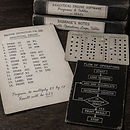
The Analytical Engine was a proposed digital mechanical general-purpose computer designed by the English mathematician and computer pioneer Charles Babbage. It was first described in 1837 as the successor to Babbage's Difference Engine, a design for a simpler mechanical calculator. The Analytical Engine incorporated an arithmetic logic unit, control flow in the form of conditional branching and loops, and integrated memory — making it the first design for a general-purpose computer that could be described in modern terms as Turing-complete. In other words, the structure of the Analytical Engine was essentially the same as that which has dominated computer design in the electronic era. Its proposed architecture included several revolutionary components: the Store, analogous to a computer's memory where numbers and intermediate results could be held; the Mill, the arithmetic logic unit responsible for performing arithmetic operations; the Reader, for inputting data and instructions; and the Printer, for outputting results. The Store was to be large enough to hold 1,000 fifty-digit numbers — larger than the storage capacity of any computer built before 1960. The machine was to be steam-driven, with one attendant running it. Babbage worked on and refined its designs continuously until his death in 1871, leaving behind thousands of pages of notes and 250 engineering drawings but a machine that was never fully built.
INFLUENCES
The Analytical Engine was not conceived in a vacuum but drew deeply on the technological and intellectual currents of its age. In its conception and design, Babbage incorporated ideas and names from the textile industry, including data and program input, output, and storage on punched cards similar to those used in Jacquard looms, a central processing unit called the "mill," and memory called the "store." The programs were encoded on punched cards in the manner of the Jacquard loom, which Ada Lovelace and her mother had seen in their visits to the English industrial areas. Babbage's own earlier Difference Engine also directly shaped the design, as he sought to generalize its operation beyond fixed polynomial calculations into universal computation. The only public presentation Babbage made on the Analytical Engine was to a group of Italian scientists. In 1840, he traveled to Turin, where he lectured on the Engine's principles, emphasizing its signal feature: its ability to guide its own operations — what we now call conditional branching. In the audience was the young Italian mathematician Luigi Federico Menabrea, who prepared an account of the principles of the Analytical Engine. In 1843, Ada Lovelace translated Menabrea's paper from French to English and provided notes three times longer than the original, including what is widely considered the first complete computer program.
IMPACT
Though never built in Babbage's lifetime, the Analytical Engine's conceptual legacy proved extraordinarily fertile. In the 1930s, a portion of the assembled Mill of the Analytical Engine attracted the attention of Howard Aiken, the creator of the Harvard Mark I. Aiken's proposal for an automatic computing machine drew explicitly on Babbage's Analytical Engine — he had read Babbage's writings and was inspired by the Victorian engineer's unfulfilled vision. Where Babbage had needed clockwork mechanisms that his era could not manufacture to sufficient precision, Aiken had access to IBM's advanced relay and counter technology. In 1937, Aiken approached IBM president Thomas J. Watson Sr. with a detailed proposal; Watson agreed to fund and build the machine, and construction began in 1939. The resulting Harvard Mark I contained over 760,000 individual components, 530 miles of wire, and 3,000 electrically operated switches. The Mark I was followed by ENIAC, the first fully electronic general-purpose computer, which led to stored-program computers like EDVAC and ultimately the first commercial computer in the United States, the UNIVAC I. Ada Lovelace's published notes on the Engine additionally inspired Alan Turing's foundational thinking on machine intelligence — making the Analytical Engine the intellectual origin point of the entire modern computing age.


Communication

Telegraph
OVERVIEW
The telegraph is any device or system that allows the transmission of information by coded signal over distance. The word telegraph is derived from the Greek words tele, meaning "distant," and graphein, meaning "to write." Developed in the 1830s and 1840s by Samuel Morse and other inventors, the telegraph revolutionized long-distance communication. It worked by transmitting electrical signals over a wire laid between stations. Samuel Morse presented a telegraph in which an electromagnet registered pulses of current on a strip of paper. The registration was based on an alphabet created by Morse that consisted of various combinations of short and long pulses. Letters were formed by switching an electric current on and off using what was called a telegraph key. In 1844, Morse sent his first telegraph message from Washington, D.C., to Baltimore, Maryland; by 1866, the cable ran from Ireland to Newfoundland, then a British colony. In the 1840s, the electrical telegraph superseded optical telegraph systems such as semaphores, becoming the standard way to send urgent messages. By the latter half of the century, most developed nations had commercial telegraph networks with local telegraph offices in most cities and towns, allowing the public to send messages addressed to any person in the country, for a fee.
INFLUENCES
The electrical telegraph grew out of advances in electrical science between about 1800 and 1840, particularly the discovery of galvanic electricity by Luigi Galvani and the invention of the electrical battery by Alessandro Volta around 1800, and research into electromagnetism by Hans Christian Ørsted, André-Marie Ampère, Joseph Henry, and Michael Faraday during the 1820s and 1830s. Before the electric telegraph, visual systems had already established the concept of long-distance rapid messaging: one of the most successful of the visual telegraphs was the semaphore developed in France by the Chappe brothers in 1791 — a system of pairs of movable arms mounted on hilltop towers, spaced at intervals of 5 to 10 km, through which chains of encoded signals could be relayed across long distances. The idea of using electricity to communicate over distance occurred to Morse during a conversation aboard ship when he was returning from Europe in 1832, when the shipboard talk was about electromagnetism in general. In the 1830s, British inventors William Cooke and Charles Wheatstone also developed a telegraph system that railroad operators used to communicate in Britain, while Morse worked with Leonard Gale, a professor, and inventor Alfred Vail to develop his own independent system in the United States.
IMPACT
The introduction of the telegraph revolutionized various sectors, including business, news dissemination, and transportation, and contributed to the growth of big business by allowing instantaneous communication over long distances. As the telegraph network expanded across the United States, it facilitated advancements in industries such as railroads, which began using telegraphs for train dispatching. The telegraph linked the world's newspapers in the 19th and 20th centuries through wire services such as the Associated Press in the U.S., Reuters in Britain, Havas in France, and Wolff's in Germany. The telegraph also laid the groundwork for future communication technologies, ultimately evolving into systems like the telephone and the Internet. Alexander Graham Bell's success with the telephone came as a direct result of his attempts to improve the telegraph. When Bell began experimenting with electrical signals, the telegraph had been an established means of communication for some 30 years, but was basically limited to receiving and sending one message at a time. The telegraph built the first global network of wires, established the economic model of wire services, introduced the discipline of concise journalism, and proved that instant long-distance communication was not just possible but commercially essential. The vacuum tube, patented by Lee De Forest in the United States in 1908, led to several improvements in telegraph performance and greatly intensified research efforts in telegraphy, telephony, and the emerging field of wireless communication.



Science & Technology

Jacquard Loom
OVERVIEW
The Jacquard machine is a device fitted to a loom that simplifies the process of manufacturing textiles with such complex patterns as brocade, damask, and matelassé. The machine was patented by Joseph Marie Jacquard in 1804, based on earlier inventions by the Frenchmen Basile Bouchon (1725), Jean Baptiste Falcon (1728), and Jacques Vaucanson (1740). The machine was controlled by a "chain of cards" — a number of punched cards laced together into a continuous sequence. Multiple rows of holes were punched on each card, with one complete card corresponding to one row of the design. This mechanism is probably one of the most important weaving innovations, as Jacquard shedding made possible the automatic production of unlimited varieties of complex pattern weaving. This "language" of weaving was an early form of binary — rather than 1s and 0s, Jacquard's punch cards could recognize whether a card was punched or not punched in a particular location, which corresponded to the necessary position of the warp threads for each pass of the shuttle. The spread of Jacquard's invention caused the cost of fashionable, highly sought-after patterned cloth to plummet, making it affordable to a wide market of consumers, not only the wealthiest in society.
INFLUENCES
The Jacquard mechanism was not so much an invention as a skilful combination of three techniques: Basile Bouchon's needles — an adaptation of the clock mechanism to weaving used to read a perforated tape (1725); Jean-Baptiste Falcon's system of perforated pasteboard cards and an infinite chain of cards, which enabled non-stop control of the loom (1728); and Vaucanson's loom, which was automated by a hydraulic system and operated by analogue cylinders (1745). In 1725, Bouchon, being the son of an organ maker, was familiar with the pegged cylinders used in musical boxes and barrel organs. He developed a loom using perforated paper loops and needles for selecting cords to raise the warp ends. In 1728, Jean-Baptiste Falcon made it quicker to change a design on the loom by substituting perforated rectangular paper cards attached to one another for the paper loops. To stimulate the French textile industry, which was competing with Britain's industrialized industry, Napoleon Bonaparte placed large orders for Lyon's silk, starting in 1802. In 1804, at the urging of Lyon fabric maker and inventor Gabriel Dutillieu, Jacquard studied Vaucanson's loom, which was stored at the Conservatoire des Arts et Métiers in Paris. Jacquard ultimately combined the best elements of all three predecessors — Bouchon's needle system, Falcon's robust card chain, and Vaucanson's automation — into a commercially viable and transformative whole.
IMPACT
The ability to change the pattern of the loom's weave by simply changing cards was an important conceptual precursor to the development of computer programming and data entry. Charles Babbage knew of Jacquard machines and planned to use cards to store programs in his Analytical Engine. In the late 19th century, Herman Hollerith took the idea of using punched cards to store information a step further when he created a punched card tabulating machine used to input data for the 1890 United States census. A large data processing industry using punched-card technology was developed in the first half of the twentieth century, dominated initially by IBM with its line of unit record equipment. When British mathematician Charles Babbage released his plans for the Analytical Engine, fellow mathematician Ada Lovelace famously observed: "The Analytical Engine weaves algebraic patterns, just as the Jacquard loom weaves flowers and leaves." Ada Lovelace took Babbage's idea a step further, proposing that the numbers the engine manipulated could represent not just quantities, but any data. The Jacquard loom ties together two of Manchester's most important historic industries: textile manufacturing and computing. It is only fitting that computing is now generating innovation back in the textile industry with such creations as wearables, 3D-printed clothing, and digital industrial knitting machines.


Arts & Culture


Piano
OVERVIEW
The piano was invented by Bartolomeo Cristofori of Italy. Cristofori was unsatisfied by the lack of control that musicians had over the volume level of the harpsichord. He is credited for switching out the plucking mechanism with a hammer to create the modern piano around the year 1700. The instrument was first named "clavicembalo col piano e forte" — literally, a harpsichord that can play soft and loud sounds — which was eventually shortened to the now common name, "piano." Cristofori apparently invented the piano about 1709, and according to contemporary sources, four of his pianos existed in 1711. He improved his piano to the point where, by 1726, he had arrived at all essentials of the modern piano action. His frames, being made of wood in the manner of a harpsichord, were not capable of withstanding the string tension that allowed later pianos their more powerful tone. Cristofori's new instrument remained relatively unknown until an Italian writer, Scipione Maffei, wrote an enthusiastic article about it in 1711, including a diagram of the mechanism. This article was widely distributed, and most of the next generation of piano builders started their work because of reading it.
INFLUENCES
The piano is founded on earlier technological innovations. The first string instruments with struck strings were the hammered dulcimers. During the Middle Ages, there were several attempts at creating stringed keyboard instruments with struck strings. By the 17th century, the mechanisms of keyboard instruments such as the clavichord and the harpsichord were well known. In a clavichord, the strings are struck by tangents, while in a harpsichord they are plucked by quills. Although the clavichord allowed for expressive control of volume and sustain, it is relatively quiet. The two-manual harpsichord produced a sufficiently loud sound, but it offered no expressive dynamic control over individual notes. In a sense, the piano finally offered the best of both previous instruments, combining high volume with a wide dynamic range in response to touch. One of the builders inspired by Maffei's article was Gottfried Silbermann, better known as an organ builder. Silbermann's pianos were virtually direct copies of Cristofori's, with one important addition: Silbermann invented the forerunner of the modern damper pedal, which lifts all the dampers from the strings at once. Silbermann showed Johann Sebastian Bach one of his early instruments in the 1730s. With the new development, Bach accepted and recommended a model that appeared in 1747, and he actually became an agent in the selling of the piano for many years.
IMPACT
Around 1777, Scotsmen John Broadwood and Robert Stodart joined forces with Dutchman Americus Backers to design a piano inserted into a harpsichord cabinet — the origin of the English grand action. During this time the range of the piano also increased from five octaves in Mozart's time to seven octaves by 1820. Beethoven utilized the extra notes on the Broadwood in his later works. Sébastien Érard's invention of the double escapement action in 1821 featured a repetition lever, allowing for faster note repetition even when the key hadn't fully returned to its resting position. This innovation was especially beneficial for the rapid, virtuosic playing techniques of composers such as Chopin and Liszt. American piano maker Steinway & Sons, established in 1853, introduced key innovations like the overstrung scale and cast-iron frame, producing unparalleled tone quality and durability. The Industrial Revolution brought with it the modern piano and the expanded eighty-eight-key range and powerful sustained tone allowed for the expression and emotion of Romantic music. Beyond the realm of classical music, ragtime, jazz, and blues owe much of their development to the piano. MIDI technology connected pianos to computers, revolutionizing composition and recording. These innovations brought new dimensions of sound and creativity, bridging the acoustic and digital worlds.