
Chapter 2
Early Years
Notable Innovators
Communication


Samuel Morse
BRIEF BIO
Samuel Finley Breese Morse was born on April 27, 1791, in Charlestown, Massachusetts, the son of distinguished geographer and Congregational clergyman Jedidiah Morse. From Phillips Academy in Andover, he was sent to Yale College, where, though an indifferent scholar, his interest was aroused by lectures on the then little-understood subject of electricity. After graduating from Yale in 1810, Morse wished to pursue a career as a painter, studying in England, and eventually becoming an accomplished portraitist. After moving to New York in 1825, he became a founder and the first president of the National Academy of Design. He also ran for office but was defeated in both campaigns to become New York mayor. It wasn't until 1832 that he first became interested in telegraphy, when he was traveling from Europe on a ship and overheard a conversation about electromagnetism that inspired his idea for an electric telegraph. He devoted the remaining decades of his life to developing and promoting the telegraph, dying of pneumonia in New York on April 2, 1872.
ACCOMPLISHMENTS
Between 1832 and 1837, Morse developed a working model of an electric telegraph using crude materials such as a homemade battery and old clockwork gears. He acquired two partners: Leonard Gale, a professor of science at New York University, and Alfred Vail, who contributed mechanical skills and access to his family's New Jersey ironworks. Together, they created what became known as Morse code, assigning letters and numbers a set of dots and dashes based on frequency of use — letters used often, such as "E," received simple codes, while those used rarely received longer ones. In 1843 he obtained Congressional support for the first telegraph line in the United States, from Baltimore to Washington. In 1844 the line was completed, and on May 24 he sent the first message: "What hath God wrought." The telegraph spread across the U.S. more quickly than the railroads had, and by 1854 there were 23,000 miles of telegraph wire in operation. Western Union was founded in 1851, and in 1866 the first successful trans-Atlantic cable link was established. Morse received honors and decorations from more than a dozen nations in recognition of his achievement.
IMPACT
The telegraph was the foundation upon which the entire modern communications age was built. Among the improvements that followed was Ezra Cornell's invention of effective insulation for telegraph wires — Cornell later founded the university in New York that bears his name — and Thomas Edison's 1874 Quadruplex system, which allowed four messages to be transmitted simultaneously over a single wire. Alexander Graham Bell was actually trying to improve the telegraph when he discovered how to transmit the human voice, leading to the invention of the telephone. Guglielmo Marconi then used radio waves to send Morse code without wires, leading directly to the birth of radio. The telegraph also evolved through the teletypewriter, where the operator's key was replaced by a keyboard and the sounder by a printer, leading to the Telex systems used well into the 20th century. At a deeper level, the binary logic of Morse code served as the conceptual forefather to the digital bits and bytes that power modern smartphones and fiber-optic networks today. Morse's telegraph not only revolutionized communication, it led to later developments in signal transmission including radio, telephone, television, and ultimately the internet.


Computation


Charles Babbage
BRIEF BIO
Charles Babbage was born in Walworth, Surrey, on December 26, 1791, one of four children of the banker Benjamin Babbage and Elizabeth Teape. From childhood, he was fascinated by mathematics, teaching himself algebra and advanced topics through books. When he enrolled at Cambridge University, he discovered he already surpassed what was being taught in his mathematics courses. Hungry for deeper intellectual engagement, he and fellow students founded the Analytical Society, which aimed to reform the teaching of mathematics at Cambridge and across England. Shortly after graduating in 1816, he was elected to the Royal Society, and in 1820 helped found the Astronomical Society. He occupied the prestigious Lucasian Chair of Mathematics at Cambridge from 1828 to 1839 — the same seat once held by Isaac Newton. His Saturday evening soirées became sparkling fixtures of London's social calendar, drawing prominent scientists, authors, and aristocrats to his home on Dorset Street, where he lived until his death in 1871. He is widely regarded today as the father of computing.
ACCOMPLISHMENTS
Babbage's two most celebrated designs were the Difference Engine, a mechanical calculator intended to eliminate human error in mathematical computation, and the far more ambitious Analytical Engine, a theoretical programmable computer he conceived in the 1830s. The Analytical Engine incorporated many features found in modern computers — memory for storing data, a logic unit for arithmetic, and even a printer for output. It could read in and execute different programs, and Babbage memorably described its looping capability as being able to "eat its own tail." Beyond computing, he assisted in establishing the modern postal system in England, compiled the first reliable actuarial tables, and invented both a type of speedometer and the locomotive cowcatcher. He also pioneered lighthouse signalling, proposed black-box recorders for monitoring conditions preceding railway catastrophes, designed a seismic detector, and advocated for decimal currency. His 1832 book On the Economy of Machinery and Manufactures was highly influential in the fields of industrial organization and economics. Karl Marx drew on Babbage's theories when analyzing factory productivity, and his work shaped the economic thinking of John Stuart Mill.
IMPACT
Babbage's visionary ideas rippled through generations of thinkers and inventors long after his death. His most direct collaborator, Ada Lovelace, worked with him to describe the Analytical Engine's capabilities, and her notes — published in 1843 — contained a groundbreaking account of how the machine could be programmed to go beyond number-crunching, effectively describing computing in the broader sense we understand today. Lovelace described how codes could be used to program the machine and outlined the concept of looping — repeating a series of instructions until a desired condition is met — a fundamental feature of every programming language that followed. It was in the 1940s that Alan Turing, the father of modern computing, discovered Lovelace's work and used it as inspiration for his own contributions to computing technology. Core ideas traceable to Babbage — mechanical process, algorithms, and computation as systematic method — reappear explicitly in Turing's foundational work on automatic computation. Together, the intellectual chain from Babbage through Lovelace to Turing laid the groundwork for modern computing and, ultimately, artificial intelligence — making possible everything from early electronic computers to today's large language models.

Science & Technology


Joseph Marie Jacquard
BRIEF BIO
Joseph-Marie Jacquard was born on July 7, 1752, in Lyon, France, and died on August 7, 1834, in Oullins. He was a French inventor whose Jacquard loom served as the impetus for the technological revolution of the textile industry and is the basis of the modern automatic loom. His father was a silk weaver and his mother a pattern maker, but Jacquard pursued careers as a plasterer, cutler, type founder, and soldier before finding an interest in his father's loom and beginning to weave fabric experimentally. Jacquard first formed the idea for his loom in 1790, but his work was cut short by the French Revolution. In 1793 Lyon rebelled against the revolutionary Convention, and Jacquard fought with Lyon's defenders. His machine aroused bitter hostility among the silk weavers, who feared that its labor-saving capabilities would deprive them of jobs. The weavers of Lyon not only burned machines put into production but attacked Jacquard as well. Eventually the advantages of the loom brought about its general acceptance, and by 1812 there were 11,000 in use in France. In 1819, Jacquard was awarded a gold medal and the Cross of the Legion of Honour.
ACCOMPLISHMENTS
Before the Jacquard system, a weaver's assistant known as a draw boy had to sit atop a loom and manually raise and lower its warp threads to create patterned cloth — a slow and laborious process. The key to the success of Jacquard's invention was its use of interchangeable cards upon which small holes were punched, holding instructions for weaving a pattern. This remarkably innovative method of "programming" a machine allowed the Jacquard loom to produce tapestries, brocades, damasks, and other intricately woven silk fabrics far more quickly than the manual technology of the past, enabling any desired pattern to be reproduced automatically. The spread of Jacquard's invention caused the cost of fashionable, highly sought-after patterned cloth to plummet, making it affordable to a wide market of consumers, not only the wealthiest in society. A remarkable demonstration of the loom's capabilities was a woven silk portrait of Jacquard himself, produced in 1839, which required 24,000 punched cards, each with over 1,000 hole positions. The portrait challenged existing notions that machines were incapable of subtlety, blurring the lines between industrial production and the arts. The use of his loom spread to England in the 1820s and from there virtually worldwide.
IMPACT
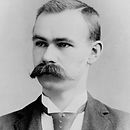
Jacquard's invention represented a revolution in human-machine interaction in its use of binary code — either a punched hole or no punched hole — to instruct a machine to carry out an automated process. The Jacquard loom is often considered a predecessor to modern computing because its interchangeable punch cards inspired the design of early computers. When Charles Babbage envisioned his Analytical Engine in 1837 — essentially the first general-purpose computer — he decided that its input would be stored on punch cards modeled after Jacquard's system. Although Babbage never built his engine, his work was well known to the mathematics community and eventually influenced the field that became computer science. Ada Lovelace famously captured the connection, writing that the Analytical Engine "weaves algebraic patterns, just as the Jacquard loom weaves flowers and leaves." Herman Hollerith, inspired by the Jacquard loom, filed a patent in 1884 for an electromechanical device that read information encoded in punched holes. His Tabulating Machine Company processed the 1890 census in a single year — dramatically faster than the eight years required in 1880 — and that company eventually became IBM. As late as 1951, the Pilot ACE computer, which was based on Alan Turing's design, used Hollerith 80-column punch-card input and output equipment, tracing a direct technological lineage back to Jacquard's loom of 1804.


Arts & Culture

Bartolomeo Cristofori
BRIEF BIO
Bartolomeo Cristofori was born on May 4, 1655, in Padua, Republic of Venice, Italy, and died on January 27, 1732, in Florence. He was an Italian harpsichord maker generally credited with the invention of the piano, called in his time the gravicembalo col piano e forte, or "harpsichord that plays soft and loud." The name refers to the piano's ability to change loudness according to the amount of pressure on the keys, a quality foreign to the harpsichord. Little is known of Cristofori's life, and his invention was not well known in his lifetime. He moved from Padua to Florence about 1690 at the request of Prince Ferdinando de' Medici, an accomplished harpsichordist — a move suggesting that Cristofori had already established a reputation as a skilled keyboard instrument builder. In 1713, Ferdinando died, and Cristofori remained in the service of the grand duke, Cosimo III, later in 1716 becoming responsible for the care of an instrument collection assembled by Ferdinando; of 84 instruments, 7 were harpsichords or spinets of Cristofori's manufacture. When he died in Florence, he left behind numerous pianos, of which only three have survived to the present day.
ACCOMPLISHMENTS
Cristofori's central achievement was solving a mechanical problem that had defeated instrument builders for generations — how to make a keyboard instrument responsive to touch. He achieved this by replacing the plucking mechanism of the harpsichord with a hammer action capable of striking the strings with greater or lesser force. The novelty of the piano lies in the way sounds are produced from the strings. Cristofori found a way to release the hammer just before the moment of impact so that it can strike and fall back unhindered and allow the strings to resonate freely, solving every problem of the mechanism in an elegant fashion — including allowing the key to be struck multiple times in rapid succession without interference. A 1700 inventory of the Grand Duke's musical assets listed an arpicembalo che fa il piano e il forte — a "harpsichord that can play quietly and loudly" — the first documentary evidence of his instrument. Cristofori improved his piano to the point where, by 1726, he had arrived at all essentials of the modern piano action. The soft pedal was invented by Cristofori and thus appeared on the very earliest pianos.
IMPACT
Cristofori's early pianos remained relatively unknown until a 1711 article by Italian writer Scipione Maffei was translated into German and widely distributed. This article included diagrams and inspired a new generation of piano builders to refine and improve on Cristofori's designs. Maffei's description was translated into German and included in Johann Mattheson's Critica musica of 1725, where it was probably read by Gottfried Silbermann, the important Saxon court organ builder. Based on Cristofori's design, Silbermann began work on his own pianos in the 1730s. Bach later praised Silbermann's pianos, going so far as to become a sales agent for them. By the 1780's, composers including Wolfgang Amadeus Mozart and Joseph Haydn accepted the piano and wrote music specifically for that instrument. Cristofori's action became a fundamental component of all pianos. In 1821, the piano maker Érard in Paris introduced groundbreaking innovations such as the double escapement mechanism, which made repeated notes faster and smoother. With these advancements, the piano could finally fill concert halls and match the expressive demands of the Romantic era's greatest composers — Chopin, Liszt, and Schumann. Beyond classical music, ragtime, jazz, and blues owe much of their development to the piano.


